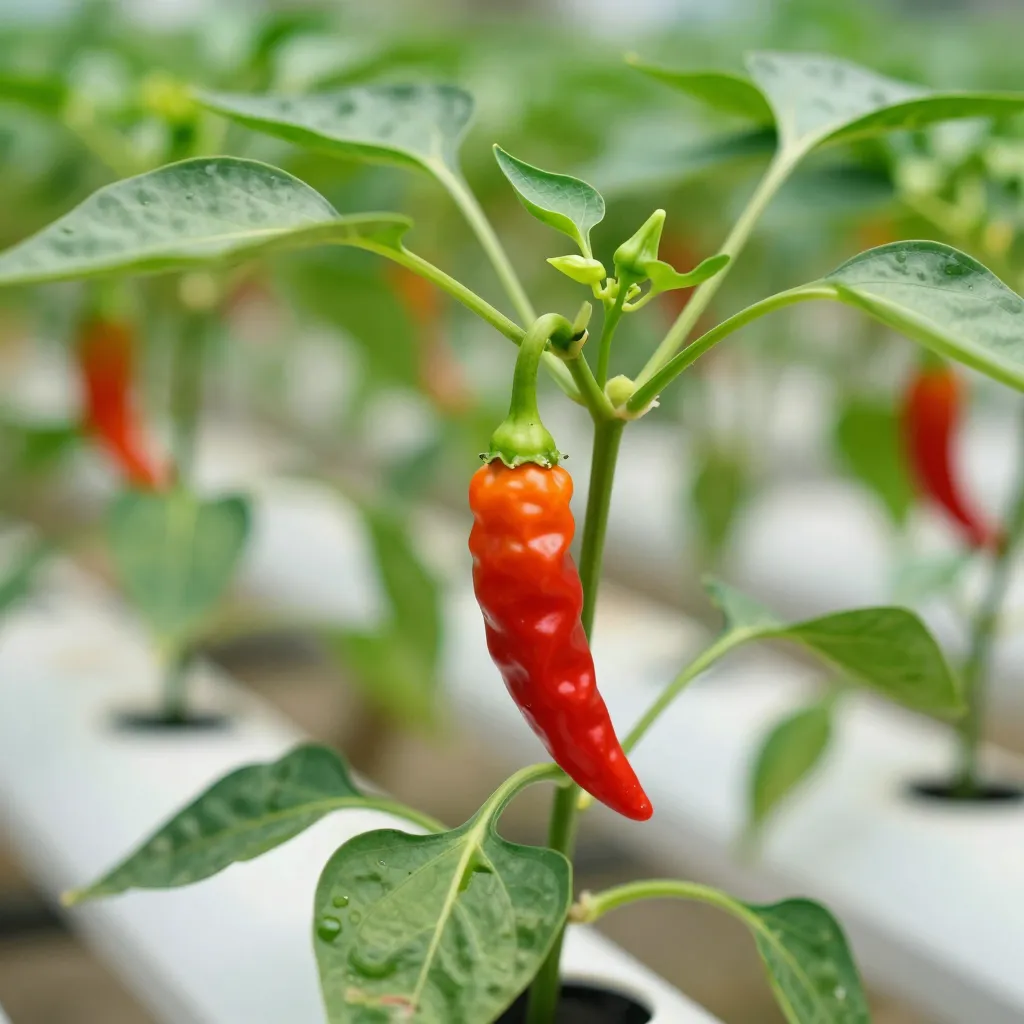
Growing peppers and chilies hydroponically opens up a world of possibilities for both yield and flavor. By ditching soil and delivering nutrients directly to the roots, you can fine‑tune every variable that influences fruit size, sweetness, and heat. Below is a practical guide to getting the most out of your hydroponic pepper garden.
Choose the Right System
For peppers, a drip‑fertigated substrate culture or Dutch bucket setup works best. These systems support large root systems, allow precise EC control, and provide the steady moisture needed for calcium uptake — key to preventing blossom end rot. If you’re just starting, a simple deep‑water culture (DWC) bucket with an air stone can still produce respectable yields, especially with compact varieties.
Nutrient Solution & EC Management
During vegetative growth aim for an EC of 1.5–2.0 mS/cm and a nitrogen‑rich formula (N ≈ 160‑180 ppm, P ≈ 30‑34 ppm, K ≈ 200‑235 ppm). As plants transition to flowering, raise EC to 2.0‑2.4 mS/cm and increase potassium to 260‑350 ppm while keeping calcium at 180‑280 ppm. A balanced calcium‑magnesium ratio (Ca:Mg ≈ 4:1) helps move calcium into the fruit, reducing the risk of blossom end rot.
pH and Water Quality
Keep the nutrient solution pH between 5.5 and 6.2 for optimal nutrient availability. Check pH every few days and adjust with pH‑up or pH‑down as needed. Use filtered or reverse‑osmosis water to avoid unwanted salts that can drift EC and cause nutrient lockout.
Lighting Requirements
Peppers are high‑light crops. Provide 14‑16 hours of light per day with a photosynthetic photon flux density (PPFD) of 400‑600 µmol/m²/s during flowering and fruiting. Full‑spectrum LEDs with a strong red‑blue mix (≈60% red, 15% blue, rest green) promote sturdy stems and abundant flower sites. If you’re growing indoors, consider adding intra‑canopy LED strips to light the lower foliage — studies show this can boost fruit set by up to 74%.
Temperature and Humidity
Maintain daytime temperatures of 24‑27 °C (75‑80 °F) and nighttime temperatures of 18‑20 °C (65‑68 °F). Consistency is crucial; large swings can cause flower drop. Relative humidity around 60 % during fruiting helps reduce transpiration stress while keeping the canopy dry enough to discourage fungal issues.
Pruning and Training
Topping the main stem when the plant reaches 20‑30 cm encourages bushier growth and more flowering nodes. Remove weak side shoots and train the plant to 2‑4 leaders using a simple stake or string. Regularly remove any yellowing leaves to improve airflow and light penetration.
Preventing Blossom End Rot
Even with adequate calcium in the solution, poor water movement can still lead to blossom end rot. Ensure consistent irrigation — avoid letting the substrate dry out between feeds. A drip system with a timer eliminates fluctuations. Good airflow and steady humidity also help calcium travel through the transpiration stream to the developing fruit.
Harvesting for Maximum Flavor
For sweet bell varieties, harvest when the fruit has reached full size and begun to change color; the longer you leave them on the plant, the higher the sugar content. For hot chilies, capsaicin continues to increase as the fruit matures, so picking at full red (or mature color) yields the most heat. Use clean scissors or a gentle twist to avoid damaging the stem, and harvest regularly to encourage the plant to produce more flowers.
Recommended Varieties
- Yolo Wonder – a bell pepper bred for hydroponics, early maturing, high yield.
- Jalapeño – compact, prolific, reliable heat.
- Thai Chili – small, intensely hot, great for limited space.
- Habanero – needs more space and light but rewards with fruity, searing heat.
- Lunchbox – mini bell peppers, sweet, perfect for high‑density NFT or DWC.
By attending to nutrient balance, lighting, temperature, and consistent watering, you’ll unlock the full potential of hydroponic peppers and chilies — producing heavier harvests, richer flavors, and healthier plants all year round.
Leave a Reply